The Sedimentary Origins of the Horn
The physical substance of Zlatni Rat (literally "Golden Cape" or "Golden Horn") originates high above in the karst elevations of Vidova Gora. Over thousands of years, seasonal torrential downpours eroded the limestone cliffs and scree slopes, funnelling mineral detritus down the narrow Veli Zagrad torrent bed directly toward the Adriatic shoreline.
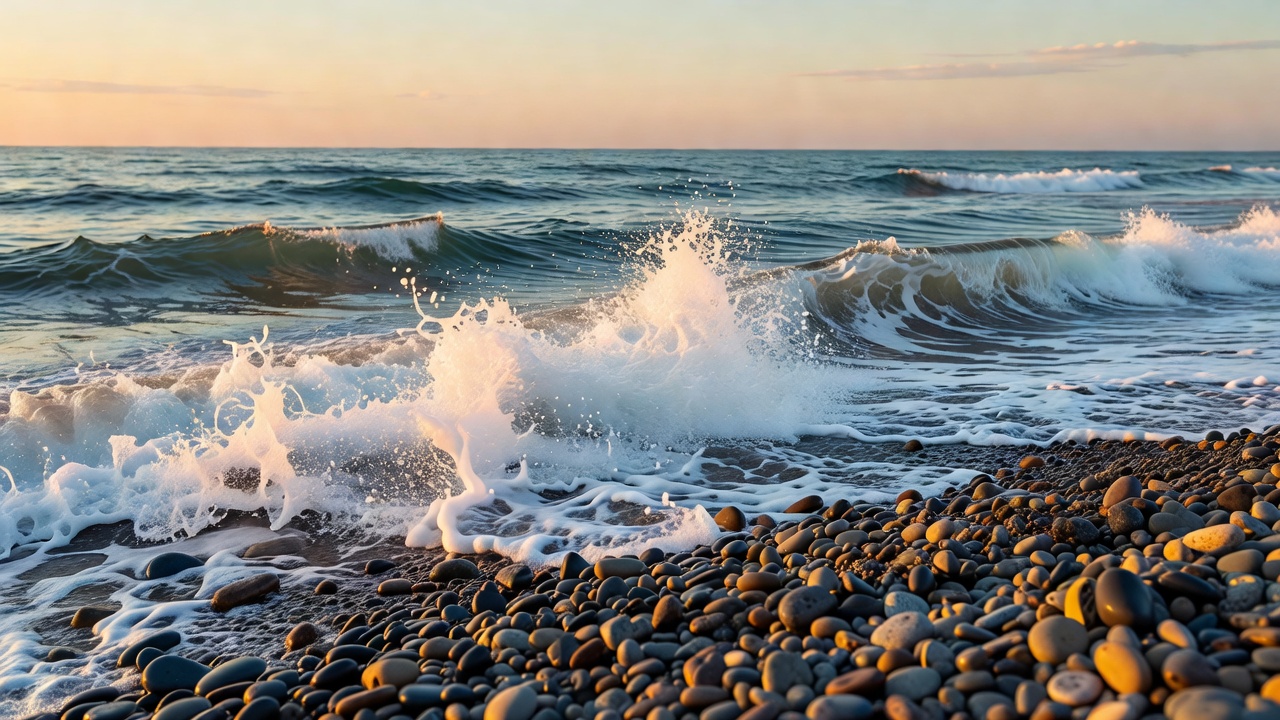
Once these jagged rock fragments met the sea, the mechanical agitation of breaking waves tumbled them continuously. Over decades, this relentless hydraulic grinding smoothed sharp facets into rounded, uniform pebbles varying between 0.5 and 5 centimetres in diameter. Because the sediment is predominantly composed of pure Cretaceous limestone, the cape exhibits its iconic pale amber and ivory coloration.
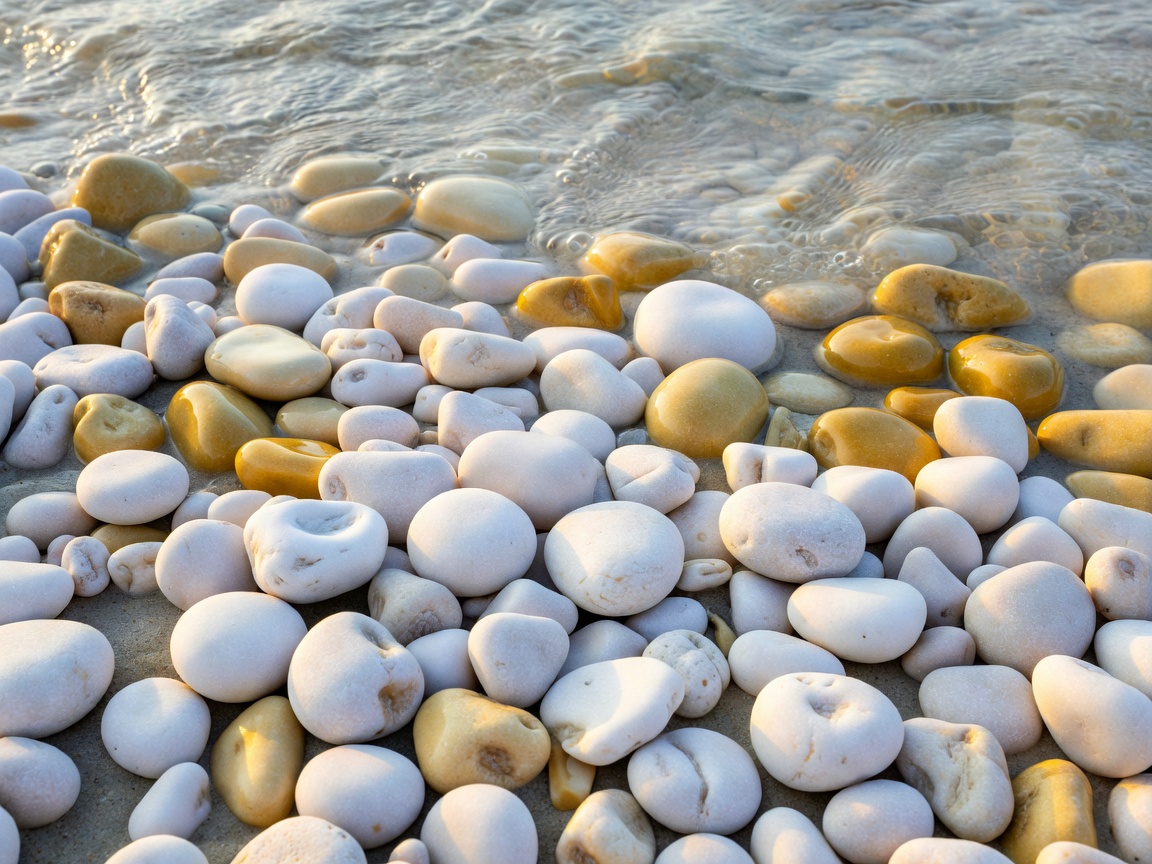
Centuries of maritime friction roll Vidova Gora limestone into smooth, self-sorting pebbles along the spit.
The Submerged Reef: Why the Spit Forms Perpendicularly
Standard coastal currents tend to carry marine sediment parallel to coastlines, forming typical barrier beaches or lagoons. Zlatni Rat, however, extends perpendicularly outward nearly 450 metres into open water. This unique configuration is governed by a submerged calcarenite submarine reef that juts out from the shoreline into the deep trench between Brač and Hvar.
As longshore drift carries loosened pebbles along either flank of Bol's shoreline, this underwater ridge acts as an anchor. The wave refraction around the reef prevents sediment from sliding down into the 50-metre bathymetric abyss, causing pebbles to stack vertically above sea level.
Current Collision: Maestral vs. Jugo
The spit’s tip is subject to two opposing hydrodynamic regimes throughout the seasonal calendar:
- The Summer Regime (Maestral Dominance): From May to September, thermal heating generates daily northwesterly winds. Waves approaching from the west wrap around the headland and push pebble crests toward the east. During peak summer, the apex is frequently hooked sharply in a clockwise curve toward Bol harbour.
- The Winter & Cyclonic Regime (Jugo & Bura): Autumn bringing the moist southeasterly Jugo wind pushes substantial swells against the eastern flank of the spit. Concurrently, cold Bura blasts descending from the Dalmatian mountains generate high-frequency cross-waves. Under these forces, the tip reverses direction, swinging distinctly toward the west.
The Formation of Transient Marine Pools
In rare winter storm episodes, intense wave trains compress the central pebble ridge while simultaneously curving the spit backward until it makes contact with the main beach flank. This creates an enclosed tidal saltwater pool inside the peninsula tip. As spring weather stabilises, wave equilibrium drains the pool and re-straightens the spit.
Bathymetric Drop-Off and Swimming Safety
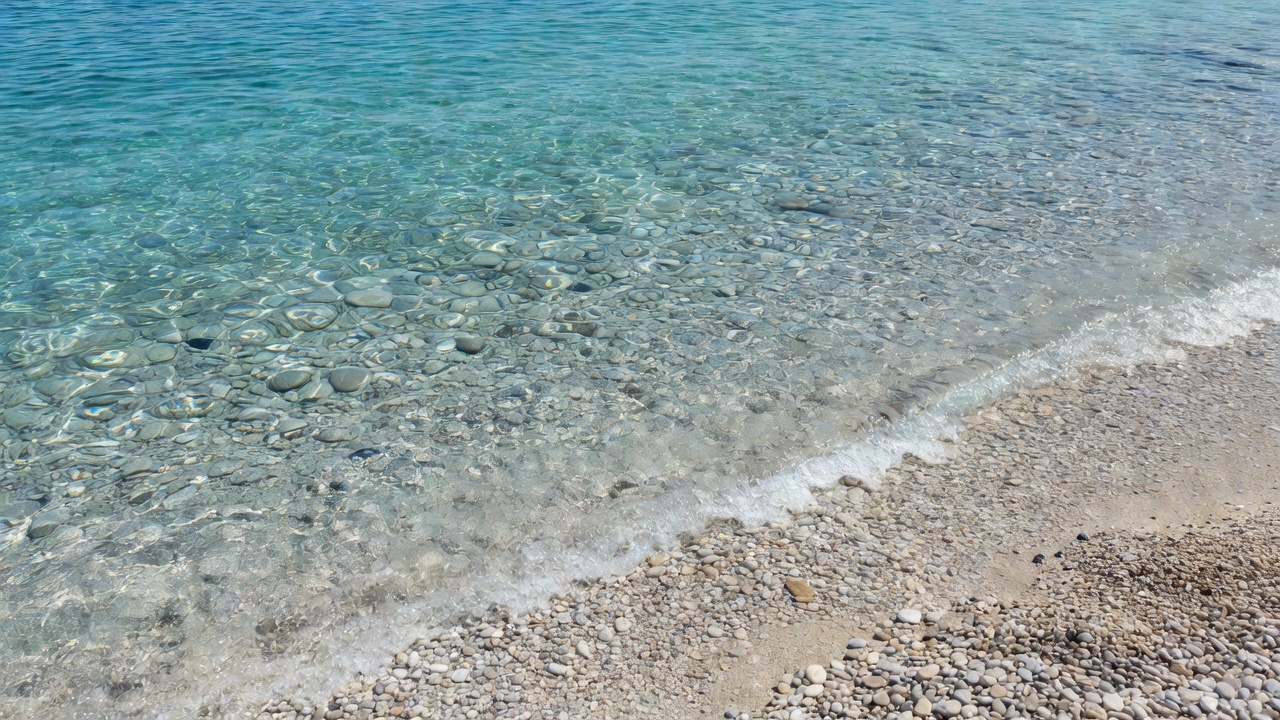
Because the spit sits upon a steep underwater ridge, the bathymetry drops precipitously on either side of the cape. Within 5 to 10 metres of the water's edge, water depth increases from knee-height to more than 15 metres. Swimmers should note that while the water remains extraordinarily clear, channel currents at the absolute apex can reach speeds of 1.5 to 2 knots during changing tides.